
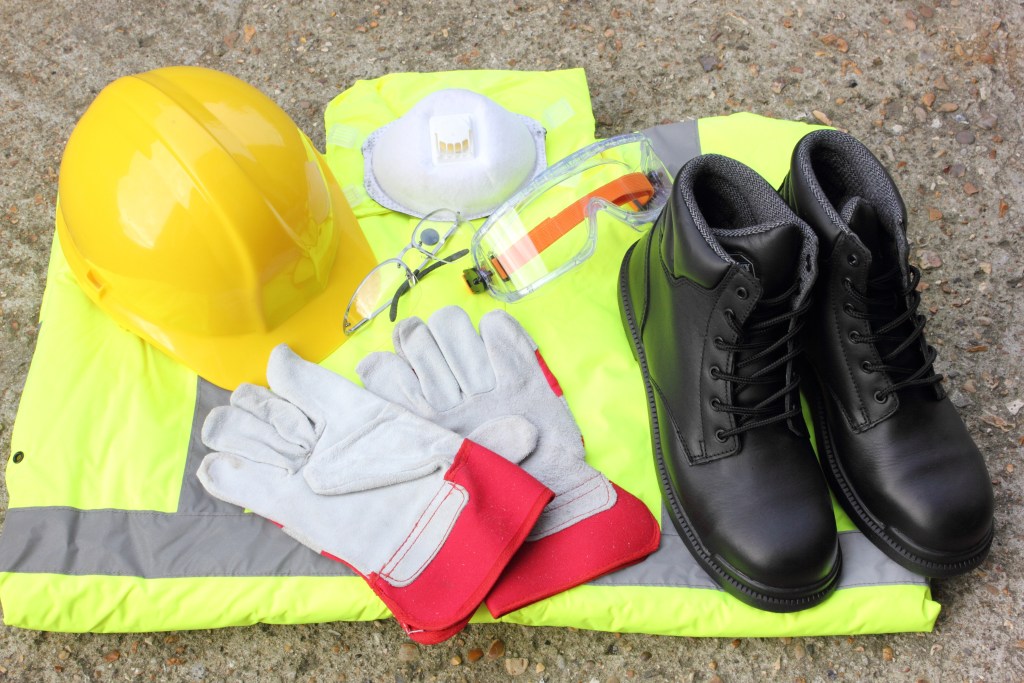
If safety were simply a matter of common sense, workplace injuries would be rare. In reality, hazards are often overlooked until an incident occurs. Many employees underestimate the risks present in routine tasks or familiar environments. When they do consider potential harm, the focus frequently shifts too quickly to personal protective equipment (PPE) instead of identifying and controlling the underlying hazard.
Many people assume that more PPE automatically means a safer workplace. In reality, personal protective equipment has limits, and understanding those limits is critical. PPE is not a substitute for eliminating or controlling hazards. It should always be the last layer of protection, not the first. For example:
- PPE doesn’t remove the hazard. It doesn’t make chemicals less corrosive, tools less sharp, or machinery less heavy. It only provides a layer of defense between the worker and the risk.
- PPE only protects when it’s used. If an employee forgets, skips it because the task is “quick,” or finds it uncomfortable, the protection disappears.
- PPE must match the hazard. The wrong gloves, an unsealed respirator, or earplugs that aren’t properly inserted all give a false sense of safety.
- PPE can fail. Safety glasses can crack, fall protection can give way, and a hard hat won’t protect a shoulder or back from a falling object.
Hierarchy of Controls
Personal protective equipment (PPE) is an important part of workplace safety, but it is not the preferred solution for every hazard. Instead, PPE should be viewed as one layer within a comprehensive safety strategy. The Hierarchy of Controls outlines the most effective to least effective ways to protect workers from hazards:
- Elimination – Physically remove the hazard.
- Perform work at ground level instead of at height to remove fall risks.
- Replace a part, tool, or piece of equipment rather than attempting a dangerous repair.
- Substitution – Replace the material or process with a safer alternative.
- Use quieter equipment, such as rotary screw air compressors instead of piston models, to reduce noise exposure.
- Substitute soap and water for trichloroethylene, which presents a cancer hazard.
- Engineering Controls – Design or modify equipment, systems, or processes to reduce exposure.
- Automate hazardous operations so workers are not directly exposed.
- Use mechanical lifting devices or transport systems in place of manual handling.
- Administrative Controls – Change how work is performed.
- Schedule maintenance or high-exposure tasks when fewer employees are present.
- Implement and train on safe work practices, standard operating procedures, emergency response plans, and good housekeeping.
- Ensure warning systems—such as signs, alarms, mirrors, labels, and instructions—are visible and functional.
- Personal Protective Equipment (PPE) – Provide barriers between workers and hazards.
- PPE requires consistent use, proper training, and regular maintenance to remain effective.
- It should be considered the last line of defense when higher-level controls are not feasible.
Controls are typically placed at the source of exposure (most effective), along the path (e.g., signage), and/or at the worker (least effective). In many cases, a combination of control measures is necessary to effectively control or mitigate the hazard and protect personnel.
Sometimes, simple solutions are the most effective.
For example, if personnel are using loose razor blades to open boxes, then supplying a different tool, such as a self-retracting ceramic box opener, is much more effective than trying to get workers to wear protective clothing (cut-resistant gloves) each time they open a box.
For more technical tasks/activities, it is essential to consider all potential risk reduction measures. If acetylene (a highly flammable gas) is being used for welding and the goal is to reduce the risk of fire and/or toxic exposure to staff:
- Ideally, the hazard is completely removed from the work environment (e.g., eliminate the gases and stop welding altogether, or outsource the work)
- If that isn’t possible, consider replacing the acetylene with something less flammable (e.g., Nitrous Oxide – it’s not flammable like acetylene, so this would reduce the risk)
- Alternatively, something could be installed to isolate employees from the hazard (e.g., put up barriers or build a barricade around the welding area and install a ventilation system)
- It is always advisable to implement procedures/policies limiting exposure to the hazard (e.g., welders would only use the cart for X minutes a week)
- Lastly, unless all hazards are completely eliminated, ensure that welders are using the correct PPE (e.g., provide appropriate fire-resistant clothing, welding hoods, etc.).
Every workplace should implement an investigative approach—look closely at injuries and near misses, and identify where reliance on PPE may be masking opportunities for stronger hazard control. Consider whether those risks can be eliminated, substituted, engineered out, or managed through changes in procedures, scheduling, or training. By focusing on higher-level controls and combining multiple strategies where possible, organizations can significantly reduce workplace hazards and create a safer, more sustainable safety culture.
Questions?
The Safety team at ComplyAuto is ready to help you find solutions that will create a safer working environment for your staff. For more information, please contact us at info@complyauto.com, or schedule a demo.